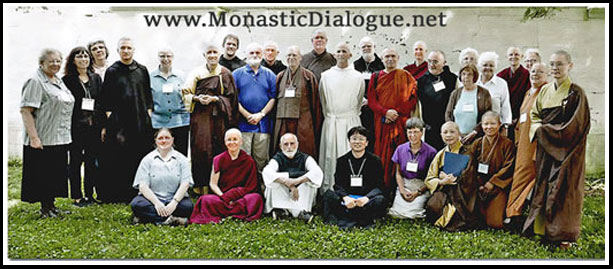
Paths to Perfection: Contemplative Practices in Christianity & Buddhism / B. Alan Wallace
Recorded at Unity Church, Santa Barbara, CA, March 12, 2008
Free Download / Click Here
Jesus counseled his followers to be perfect as their Father in heaven is perfect, and for centuries, mystical union with God—understood as perfect love and omniscient wisdom—was the ideal of Christian contemplatives. Buddha counseled his followers to realize perfect freedom from suffering by irreversibly dispelling all the afflictions and obscurations of the mind. The ideals of personal liberation and perfect enlightenment have been pursued by Buddhist contemplatives over the past 2,500 years.
While these two contemplative traditions appear to have had little contact throughout their long histories, they did exhibit remarkable parallels as well as differences. Ideals of perfection and the means to realize it will be explored in this lecture, with the hope that the vitality of both the Christian and Buddhist contemplative traditions may be revitalized in the modern era, which could so deeply benefit from their insights and wisdom.
THE CONSCIOUS UNIVERSE
The Conscious Universe: Where Buddhism and Physics Converge / B. Alan Wallace
Recorded at Unity Church, Santa Barbara, CA , Jan. 16, 2008
Free Download / Click Here
Physicists have long assumed that the universe is fundamentally composed of matter and energy and that life and consciousness are accidental byproducts of configurations of matter. But a growing number of distinguished physicists are now suggesting that consciousness may play a much more fundamental role in nature than scientists previously believed.
In this lecture Alan Wallace will review some of the most provocative theories presented by such leading physicists as John Wheeler, Stephen Hawking, and Andre Linde that challenge many of the materialist assumptions based on outdated 19th-century physics. And he will discuss how these theories may relate to Buddhist theories and practices, including those of the Theravada, Mahayana, and Dzogchen traditions.
|