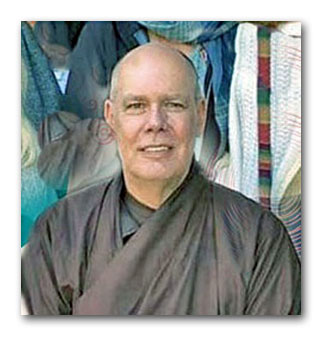
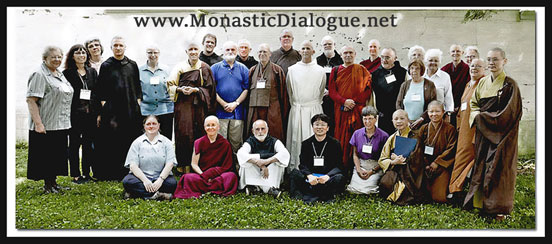
Green Monasticism
A Buddhist-Catholic Response to an Environmental Calamity
Edited by Prof. Donald Mitchell, and William Skudlarek, O.S.B.
Hi Kusala,
Molly here from Buddhadharma magazine ... I thought you might be interested in the attached PDF copy of our "Unaffiliated Buddhists: Going It Alone" story, from the Spring 2010 issue of Buddhadharma: The Practitioner's Quarterly. It's a great set of pieces, and I think, worthy of some attention. Please feel free to post the attached PDF as website content.
A Photo Essay of the Four Places of Buddhist Pilgrimage in India - PDF - 5.97 MB
LUMBINI: “Here the Tathagata was born! This, Ananda, is a place that a pious disciple should visit and look upon with feelings of reverence.”
BUDDHAGAYA: “Here the Tathagata attained the unexcelled Supreme Enlightenment! This, Ananda, is a place that a pious disciple should visit and look upon with feelings of reverence.”
SARNATH: “Here the Tathagata set rolling the Wheel of Dhamma! This, Ananda, is a place that a pious disciple should visit and look upon with feelings of reverence.”
KUSINARA: “Here the Tathagata passed away into Parinibbana. This, Ananda, is a place that a pious disciple should visit and look upon with feelings of reverence.”
Buddhist Pilgrimage / New Edition 2009 by Bro. Chan Khoon San
The idea of a pilgrimage originated from the Buddha twenty-five centuries ago! Before he passed into Mahaparinibbana, the Buddha advised pious disciples to visit four holy places the sight of which will arouse faith and religious urgency after He was gone, namely: Lumbini, Buddhagaya, Sarnath and Kusinara. The pious disciple should visit these places and look upon them with feelings of reverence, reflecting on the particular event of the Buddha’s life connected with each place. Since the Mahaparinibbana of the Buddha, these four shrines of Buddhism have become the focal points for pious disciples to rally around and seek inspiration. By the time of King Asoka, four more places, namely: Savatthi, Sankasia, Rajagaha and Vesali, that were closely associated with the Buddha and scenes of His principal miracles, were added to the pilgrimage itinerary. Together, they make the Eight Great Places of Pilgrimage.
Buddhism Course
Compiled and published for free distribution
by Bro. Chan Khoon San
Over the last few years, several readers have indicated to me that the articles in the Introductory Course in Buddhism were too brief and should be expanded to provide more details. This new book entitled “Buddhism Course” is a carefully researched and upgraded version. It contains 17 chapters dealing with most of the relevant topics on Buddhism, such as: Life of the Buddha, Four Noble Truths and Eightfold Noble Path, Dependent Origin, Law of Kamma, Death and Rebirth, Five Destinations, World Cycles when Buddhas Appear, Ten Bases of Meritorious Action, Buddhist Vipassana Meditation, Recollection of the Buddha, Dhamma and Sangha and the Three Baskets (Tipitaka) in Buddhism.
The Shōbōgenzō is the recognized spiritual masterpiece by the thirteenth century Japanese Sōtō Zen Master Eihei Dōgen. It is comprised of discourses that he gave to his disciples, in person or in writing, at various times between 1231 and his death twenty-two years later at age fifty-three.† These discourses cover a wide range of topics pertinent to those in monastic life though often also relevant to those training in lay life. He discusses matters of daily behavior and religious ceremonial as well as issues involving the Master-disciple relationship. He also explores the deeper meaning that informs the so-called Zen kōan stories, which often puzzle readers by their seeming illogicality and contrary nature.
Mirror of Wisdom / Teachings on Emptiness - by Ven. Geshe Gyeltsen
Buddha Shakyamuni taught the Perfection of Wisdom, otherwise known as the Wisdom Gone Beyond, on Vulture's Peak, Rajgir, in what is today the Indian state of Bihar.
These sutras focus on the subject of emptiness, the ultimate nature of reality, and the Heart Sutra is one of the most significant. It is a beautifully condensed version of the Buddha’s teachings on emptiness, containing their essential meaning in only a few lines. Geshe Gyeltsen tells us that by integrating this teaching with our minds, it is possible for us to become enlightened within a single lifetime.
Buddhist Global Relief is an all-volunteer organization comprising people of different Buddhist affiliations who share the vision of a Buddhism actively committed to the task of alleviating social and economic suffering. Its mission is to provide relief to the poor and needy throughout the world regardless of nationality, ethnicity, gender, or religion. Bearing in mind the Buddha’s statements that “hunger is the worst kind of illness” and “the gift of food is the gift of life,” BGR especially focuses on providing food aid to those afflicted by hunger and lack of food security. Its long-range goal, however, is to combat all the manifestations of poverty that detract from the inherent dignity of human life.
Born in June 2008, BGR has already initiated projects that promote food relief, poverty alleviation, and education in Sri Lanka, Burma, Vietnam, Cambodia, India, Niger, Mali, and Haiti. In the near future, while maintaining the projects already started that need further support, BGR also plans to contribute towards the education of girls in Afghanistan and reconstruction in Haiti in the wake of the devastating earthquake that struck the island early this year.
The chair and founder of BGR is Ven. Bhikkhu Bodhi; its panel of advisers includes Rev. Heng Sure, Rev. Joan Hoeberichts, Prof. David Loy, Prof. Jan Willis, and Andrew Harvey. For further information about BGR, including details about projects, making donations, and volunteering service, see the BGR website:
"We Are The World" / Performed by 33 Ukulele Players
From... Australia, Canada, Germany, Hawaii, Italy, Japan, Malaysia, Sweden, Switzerland, U.K., U.S.
The
Urban Dharma Newsletter includes: Buddhist News, Articles, Book
Reviews, and More.Newsletter
Archives Fill out your e-mail address
to receive The Urban Dharma Newsletter!